Trojan Wars
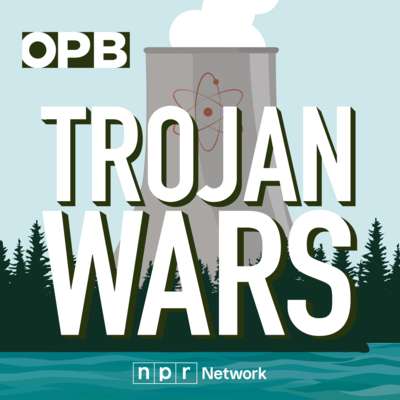
The scramble to meet the energy demands of AI and data centers is leading to what some are calling a "Nuclear Renaissance," and the Pacific Northwest is at the heart of it. Oregon and Washington are the sites of the world’s first full-scale nuclear power plant (Hanford), the world’s then largest pressurized-water nuclear reactor (Trojan Nuclear Power Plant), the only company with regulatory approval to build small modular reactors (NuScale), and a growing number of power-hungry data centers — and yet Oregon has a constitutional amendment banning new nuclear projects. Why? It all comes back to the region's history with nuclear, and the legacy of the environmental movement in the Northwest.
"Trojan Wars," from OPB and 30 Minutes West, tells the story of how our grand plans for cheap, reliable, carbon-free power in the 20th century ended up in a heap of concrete and barrels of nuclear waste on the banks of the Columbia River. And we ask: What went wrong the first time around? And is it possible to get it right this time?
Most Recent Episode
More Episodes
Guest Ep: How to Save a Planet
In the final months of the Trump administration, there were a flurry of environmental rollbacks that hearkened back to the Timber Wars, including changes that would make it easier to log old trees and a huge reduction in the area protected for the northern spotted owl. So we wanted to bring you an episode from another podcast, "How to Save a Planet," that helps explain environmental rollbacks like these in light of one of the big ideas we explored: how did environmental laws go from bipartisan agreements to a wedge in the culture wars. And while we looked at this idea as it related to the Endangered Species Act and forests, they explore it as it relates to climate change. The episode is called “Making Republicans Environmentalists Again.”
For more on this episode of "How to Save a Planet," hosted by the journalist Alex Blumberg and the scientist Dr. Ayana Elizabeth Johnson, including a reading list, check out: https://gimletmedia.com/shows/howtosaveaplanet/gmhwdon/making-republicans-environmentalists
Ep 7: A Way Forward
Is the Northwest fatally divided, or can we overcome our differences and work together? We tell the story of one group of loggers and environmentalists who have found some semblance of common ground. But it didn’t come easy. And no one knows how long it’ll last.
If you want to learn more about the Timber Wars, you can find the additional reading list we mention, plus a transcript for this episode, at: https://www.opb.org/article/2020/09/01/timber-wars-trailer-episode-guide/
Ep 3: The Owl
Throughout the 80s, environmentalists lost in the woods and in the courtrooms. There just weren’t many laws that protected trees. But there were laws that protected animals. And the idea started to percolate: what if they could protect the old growth by protecting an animal that depended on it.
Depending on who you are, the northern spotted owl is either the hero of this story, or the villain. And the Endangered Species Act is either an incredible conservation tool, or a hammer that smashes rural economies. But those beliefs miss the fact that it was a single sentence in an entirely different law that locked up the forests. How a reclusive bird halted the march of chainsaws.
For a transcript of this episode, go to: https://www.opb.org/article/2020/09/22/timber-wars-episode-3-the-owl/